

CSR Master Playbook
Last updated:
The CSR Master Playbook is the training program for the person answering your calls: twenty-four lessons, from phone etiquette and call control to objections, memberships and call quality, with weekly scorecards. It is written for owners of independent HVAC and plumbing companies across the United States and Canada, and their customer service reps work through it.
It is the one product in the line that touches money you have already spent. Every other improvement in your company creates something new. This one stops you from throwing away what you bought.
Live every Thursday, 11 AM to noon Central. Register and get the book free.
01 / The problem
You Are Paying for Leads and Losing Them at the Front Desk
Work out roughly what you spend a month on advertising, then divide it by the number of calls it produces. That is what a ringing phone costs you.
Now think about what happens to that call. It reaches somebody at a desk who is also booking tomorrow's schedule, chasing a part, and handling a customer who is upset about a window that slipped. She is not being careless. She is being interrupted. And the caller who was ready to book gets a slightly vague answer, says she will call back, and calls the next company on the list instead.
Read moreShow less
You never see that call. It does not show up as a lost job, because it never became a job. It shows up as a marketing budget that is not working, which is why so many owners respond to it by spending more.
The person answering your phone decides how much of your advertising money turns into work. That is not a soft-skills observation. It is the conversion rate on every dollar you spend to make that phone ring.
02 / What is inside
What the CSR Master Playbook Contains
Twenty-four lessons in two parts, built around three things the cover names: revenue conversion, customer service skills and call diagnostics.
Part one, Customer Service Foundations
Part one, Customer Service Foundations, is twelve lessons: professionalism and first impressions; phone etiquette and call control; active listening and empathy; building rapport and customer trust; handling objections and difficult customers; scheduling and dispatch coordination; call documentation and accuracy; maintenance plan and membership enrollment; upselling accessories and add-ons; conflict resolution and call recovery; communication with technicians, sales and management; and time management and call flow efficiency.
Part two, Advanced CSR Development
Part two, Advanced CSR Development, is twelve more: advanced objection handling and negotiation; customer retention; delivering WOW experiences; handling emergency and after-hours calls; sales support and lead qualification; getting the most from your CRM and software; communicating across cultures and personalities; advanced call coaching and peer training; metrics, KPIs and call quality monitoring; managing stress and preventing burnout; leadership development for CSRs; and a capstone on the CSR role as a career path and a mentor.
The lessons run in eight sections
The lessons run in eight sections, and each section ends with a badge: CSR Essentials, Trust Builder, Revenue Enabler, Team Connector, Customer Loyalty, Sales Connector, Peer Mentor and Pathfinder. Weekly scorecards and monthly role-plays keep the standard running once the lessons are done, which is the part most phone training skips.
This playbook covers how your calls are answered, booked and followed up, and how the person answering them grows in the role. It does not set your prices, and it does not cover what happens once a technician arrives.
03 / The approach
Customer Friendly, Low Pressure, Good Information
The approach is deliberate, and it is the opposite of a call center.
Give the caller good information and make it easy to say yes. A homeowner with water under a sink or no air conditioning in July is not looking to be handled. She wants to know somebody competent is coming and roughly when. Most calls are lost by vagueness, not by resistance, and the fix is almost always clarity rather than persuasion.
Read moreShow less
That is also why the lessons read the way they do. Nobody is being taught to talk a caller into anything. They are being taught to answer the question that was asked, ask the two or three questions that decide the job, and offer a time.
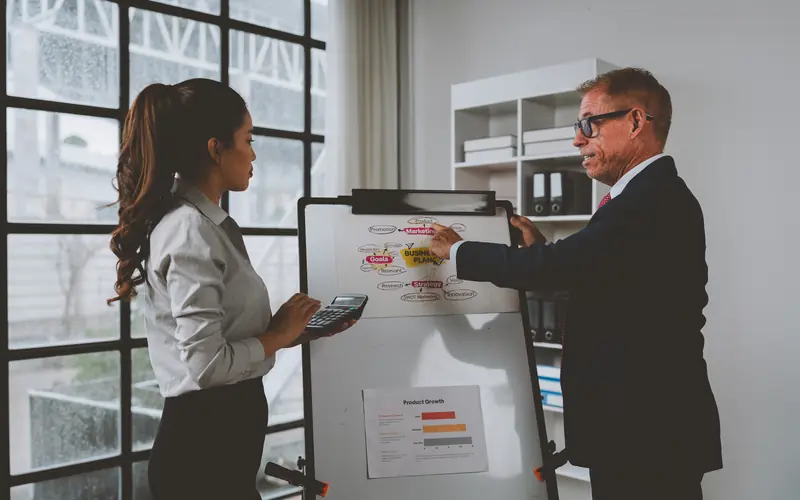
Kerry WebbThe person answering your phone decides how much of your advertising money turns into work.
04 / What changes
What Changes on the Phones
The honest version is that nothing changes in week one, because nobody runs a new standard well the first time.
What changes over a season is that the call stops depending on who picked it up and what kind of morning she was having. A new hire can be trained on how you answer the phone instead of being left to absorb it. Every call arrives at dispatch with the same information on it. And when the booking rate moves, you can see which part moved it, because the weekly scorecard measures the same things the lessons teach.
Read moreShow less
None of that is a promise about a number. The U.S. Small Business Administration makes the same general point about training and managing small teams: people do consistently what they have been shown, measured on, and coached against.
05 / Who it is for
Who Buys It and Who Answers the Phone With It
You buy it. Your customer service reps and office staff use it. Your office manager, or whoever owns the phones, coaches to the scorecard.
In smaller companies the person answering the phone is also doing payroll, ordering parts and keeping the schedule together. That is exactly why a written standard helps rather than adds work. The parts of the call that matter stop being something she has to hold in her head between interruptions.
06 / Pairs with
Where It Sits Next to the Rest of the Line
This is the front of the funnel, so it is often the right first purchase even when it is not the loudest problem.
The CHOICE Service Call Playbook picks the customer up where this playbook leaves her, at the door with a technician. The CHOOSE2 Replacement Sales Playbook covers the replacement conversation that sometimes follows. The Home-Service Profit and Performance Toolkit is how you find out what all those booked calls are actually earning. Leadership Training is the live version of this work with your whole team, and Systems and Tools for Growth is where BGS installs daily capacity planning around dispatch and scheduling. You can see all five products in one place.
Read moreShow less
Trade bodies such as the Air Conditioning Contractors of America and the Plumbing-Heating-Cooling Contractors Association support contractors on the work itself. BGS Strategies works on the business around the work, and the phone is where that business starts.
-
Playbook
CHOICE Service Call Playbook
For your technicians, on the call.
-
Playbook
CHOOSE2 Replacement Sales Playbook
For the people who ask for the order.
-
Toolkit
Home-Service Profit and Performance Toolkit
A Growth Roadmap from $1 million to $3 million.
-
Operating system
Elite HVAC Service Manager System
The premium training, for the person who runs your service department.
07 / Questions
Frequently Asked Questions: CSR Master Playbook
Who at my company works from this playbook?
The person or people who answer your phone and book the work, whatever you call the role. In a smaller company that may be one person who also does three other jobs. Whoever manages the phones uses the scorecard, and in plenty of companies that is still the owner.
What booking rate should I expect?
The CSR Master Playbook is built to the 90% booking-rate standard named in Kerry's Blue Collar Blueprint material, measured the same way every month. What it gives you is your own rate, measured that way, and a standard that explains the movement.
What is included in the CSR Master Playbook?
Twenty-four lessons in two parts, Customer Service Foundations and Advanced CSR Development, set out in eight badged sections, with weekly scorecards and monthly role-plays, written for home-service calls rather than adapted from a call center.
What does it cost to work with BGS Strategies?
The business assessment is free, and Level 1 of the Skool community is free. It contains the 7 Step Method, and the community on Skool is free to join. There is no trial period and no card required.
To get the full set of the 7 Step Tools, serious clients move to Level 2 membership on Skool at $295 a month. If you want to fast-track your growth and success, sign up for the 90-Day Plan at $7,500. To learn more, register for the $100,000 Conversation webinar.
My CSR has answered the phone for years. Will this help her?
Usually yes, and usually because of the scorecard rather than the lessons. Years on the phone produce a good call when the day is calm. A written standard produces the same call on the Monday in July when everything is on fire, which is when the expensive ones come in.
Does this replace training my office team?
No. This is a written standard they work from daily. Leadership Training is live training with weekly reinforcement delivered to your people, including office to field communication and accountability. Owners often run the playbook first, because live training lands better in a company that already has a standard.
Ask About the CSR Master Playbook
Ask about this product and say you are asking about the CSR Master Playbook. Kerry will come back to you with what it costs, what you receive and whether the front desk is the first place to spend your money.
- Book the $100K Conversation.
-
Take the Business Assessment.
For owners still working out where the problem is.
Call BGS Strategies on 940-441-3231 or email support@bgsstrategies.com. The office is open Monday to Friday, 7 AM to 4 PM Central, and calls before 10 AM usually reach voicemail because Kerry is coaching. BGS Strategies works with home-service companies across the United States and Canada from its home base in Lantana, Texas.